Homesick
Or The Perils of Domesticity

I am old. And I am homesick. Or rather, I ask myself how is it that I am homesick even as I am so old? Should I not know how to do this by now?
And it arrives almost like serendipity, a revelation. Why my father, once so intrepid and ready to venture out, now worries so much about his food wherever we travel—whether he will like it at all, whether it will suit his palate and digestion, and whether it might be wiser, to stay at home.
I am old, and I am homesick.
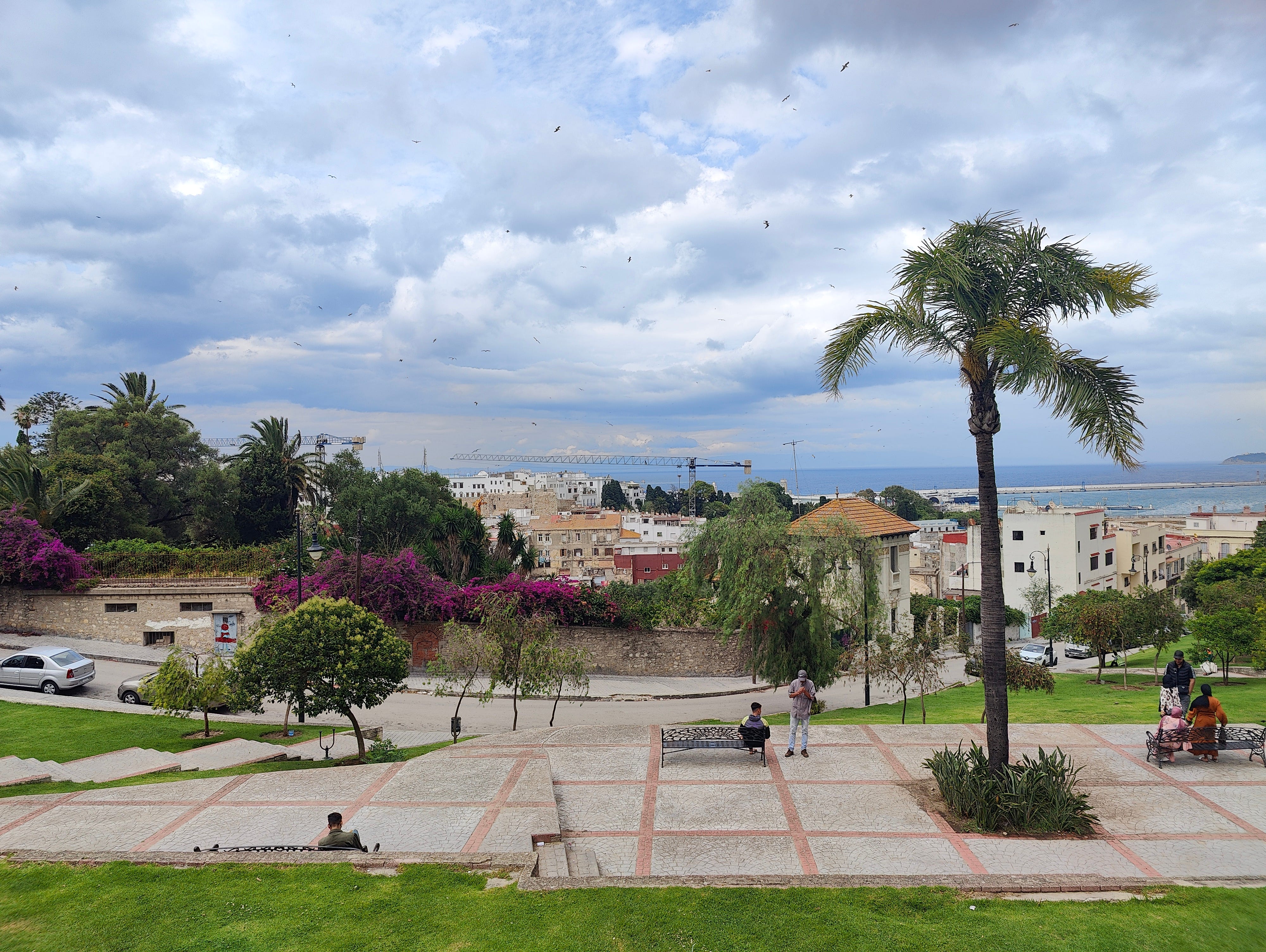
I write the above in the seaside city of Tangier, Morocco on a three week residency hosted by The Minority Globe, Morocco with my friend and collaborator, Emeka Okereke who is a Nigerian visual artist, writer, filmmaker and DJ who lives and works between Lagos and Berlin. Emeka and I have embarked upon a collective we call Ala-Ila in which we look together at sites and events we consider via postcoloniality and movement, among other things.
Emeka has been involved in the praxis of body and movement for a while, via both his body of work as well as the pioneering projects of the Invisible Borders Trans-African Photographers Organisation, an organization that he founded and continues to further with great drive and vision. So it is a credo we both have been talking about for a while, a credo that I have also always thought about as my raison d’etre. A driven and duly practised addiction to movement. “Wheels on your feet,” my mother used to say. And indeed, there were. Staring at the age of eighteen, I figured that I was only able to activate new muscles—physical, mental, and emotional—by going elsewhere. Only elsewhere were the accoutrements of self not so heavy that they prevented the access to other worlds and selves. Only by traveling, was I able to shed home. And self.
Two months in one place, and I would be raring to go. Elsewhere.
Is this what powered the Age of Discovery? Not that, to paraphrase Rushdie, anything was covered in the first place. But is this somewhat universal youthful restlessness what animated the Treaty of Tordesillas and its arrogant bifurcation of the world?
I don’t think so. For by gender as much as by postcolonial location, I cannot claim the confidence of a Portugal or a Spain of the 15th century.
But what do I make then of this refusal to sit tight with self. To only know the world as your body inhabits it. To seek and swallow whole in the hope that surely, this is not it. This, in this case, being home, limits, constraint, boundaries, horizons.
But now, I am homesick, in a life that is finding it difficult to attune itself to what it used to consider necessary, movement. So much for her last post, and claiming to be at home in the world, you might think. And it is telling.
I read Olga Tokarczuk again, and marvel at her ability to write me in long-forgotten prose. In Flights, she writes:
“That life is not for me. Clearly I did not inherit whatever gene it is that makes it so that when you linger in a place you start to put down roots. I’ve tried, a number of times, but my roots have always been shallow; the littlest breeze could always blow me right over. I don’t know how to germinate, I’m simply not in possession of that vegetable capacity. I can’t extract nutrition from the ground, I am the anti-Antaeus.
In the last year or so, while on sabbatical, I have tentatively re-entered my life of movement, and discovered that over three years of being held down, I have willy-nilly put down roots. They sit badly on me (or is it that I sit badly on them?) but do their work nevertheless. There is a city I live in, a house I clean, people I love everyday, walks I recognize, habits I soothe myself with, and a life of slight stupor that bathes me in a comfort I do not remember ever having. It’s…nice.
But this life of roots also nails me to the ground, a feeling I am only able to interpret as petrification and decay. For when movement has forever underlined vitality, surely its opposite is well, its opposite. Alas, alack, woe is me and some such.
Maybe this is the true nature of a mid-life crisis. And no, there is no TMI confession forthcoming. “Home in the World” is the title of Amartya Sen’s memoir; it reminds me of “Yātum ūrē yāvarum kēḷir”, the Tamil Sangam philosopher Kaniyan Poongunranar’s ode and plea to the universal spirit. Loosely translating to “The world is my town and its people my kin”, it sounds to me like lines mouthed by James Bond like heroes or Robin Hood like protagonists, as they sashay through town, forest, country and casino.
I wonder if it’s more or less men’s lot to walk around the world at ease with its invitation to belong. Women at home, men in the world. And I find myself fully at home, while not quite being woman. Aha.
It does not help that homes are not necessarily great for women. Coming to feminist consciousness in the eighties and nineties in India meant a necessary flight from home and homeliness as antitheses to modernity and freedom. Many of us were told by our mothers to escape in the hopes that we would escape the relations of patriarchal power that they both felt and articulated but found themselves unable to shake off. In the process, they also set off in us a profoundly patriarchal bifurcation between home and world. I do not stay home, and therefore I am. Worthy, free, valued; pick your poison. In the ongoing project of reconciling home with received ideas about home, I am discovering that my crisis is not about choosing world over home, but of reconciling one with the other.
In some ways, my mid-life crisis then is a crisis of dwindling double vision. I’m more at home at home than ever before, while the world has become unheimlich. Three years of being shut away from it, and it has lost its sheen. Malls, cliffs, fjords, double-decker buses; in Bjork’s words, “I have seen it all”. And all of it is in my home.
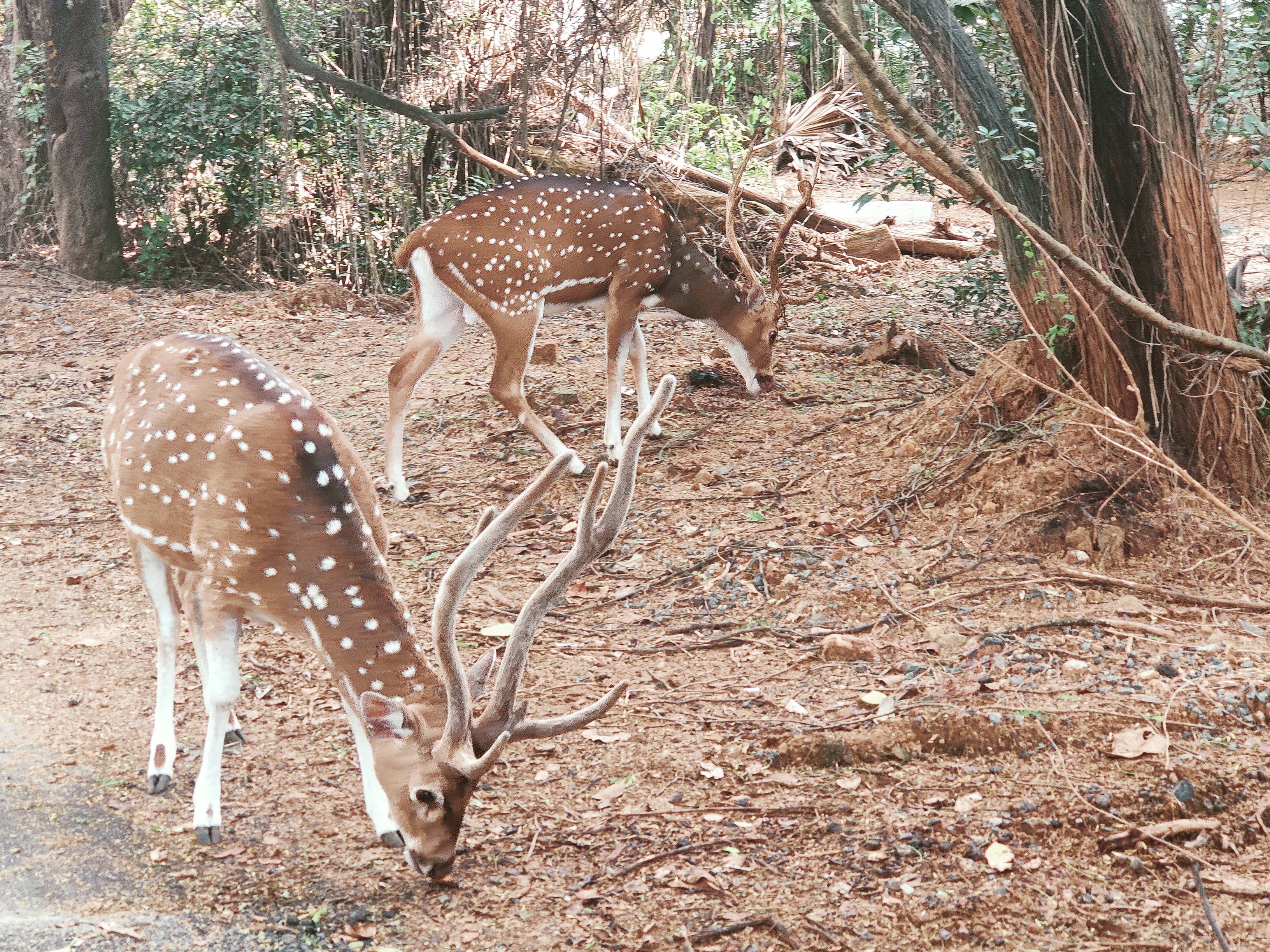
A new painting, a new speck of dust. Sourdough starters that rise and fall, a new leaf on an unnoticed tree, lizards by the dozen (a baby just the other morning). A high-pitched voice that calls to her daughter across the street, loudspeakers booming from the school next door urging another wilful boy to fall in line. The deer yowling.
In this little jewel of an essay titled “Impermissible Joys”, the writer and feminist academic Roxani Krystalli writes of the joys of beginner’s eyes and beginner’s ears, generating, in her words, “…a kind of awe that almost requires cluelessness, a form of marvel that is nourished by novelty.”
I’ve been homesick for a long time, I’ve realized. And now I’m home. It is only now a matter of time before the world makes its way back to me.
____________
What am I reading:
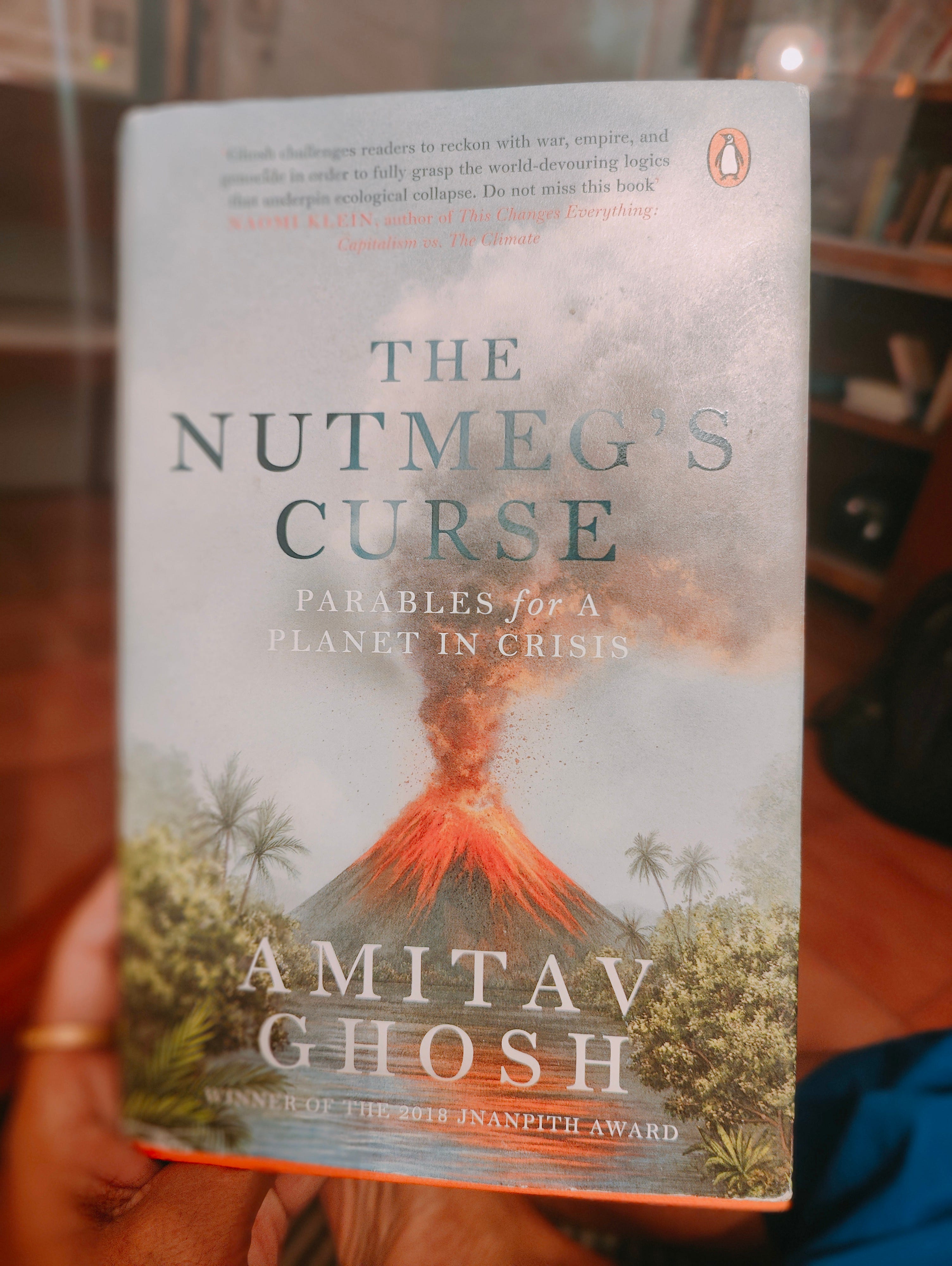
Ghosh reminds me as to the beauty of prose, but also the necessity of history and the long vision. Curating a truly stellar set of archival sources, he lays out for the reader a necessary thesis on why the world will survive us even as our long-drawn conceits to modernity would do well to learn from other ways of understanding co-existence and connectedness.
What I am cooking:
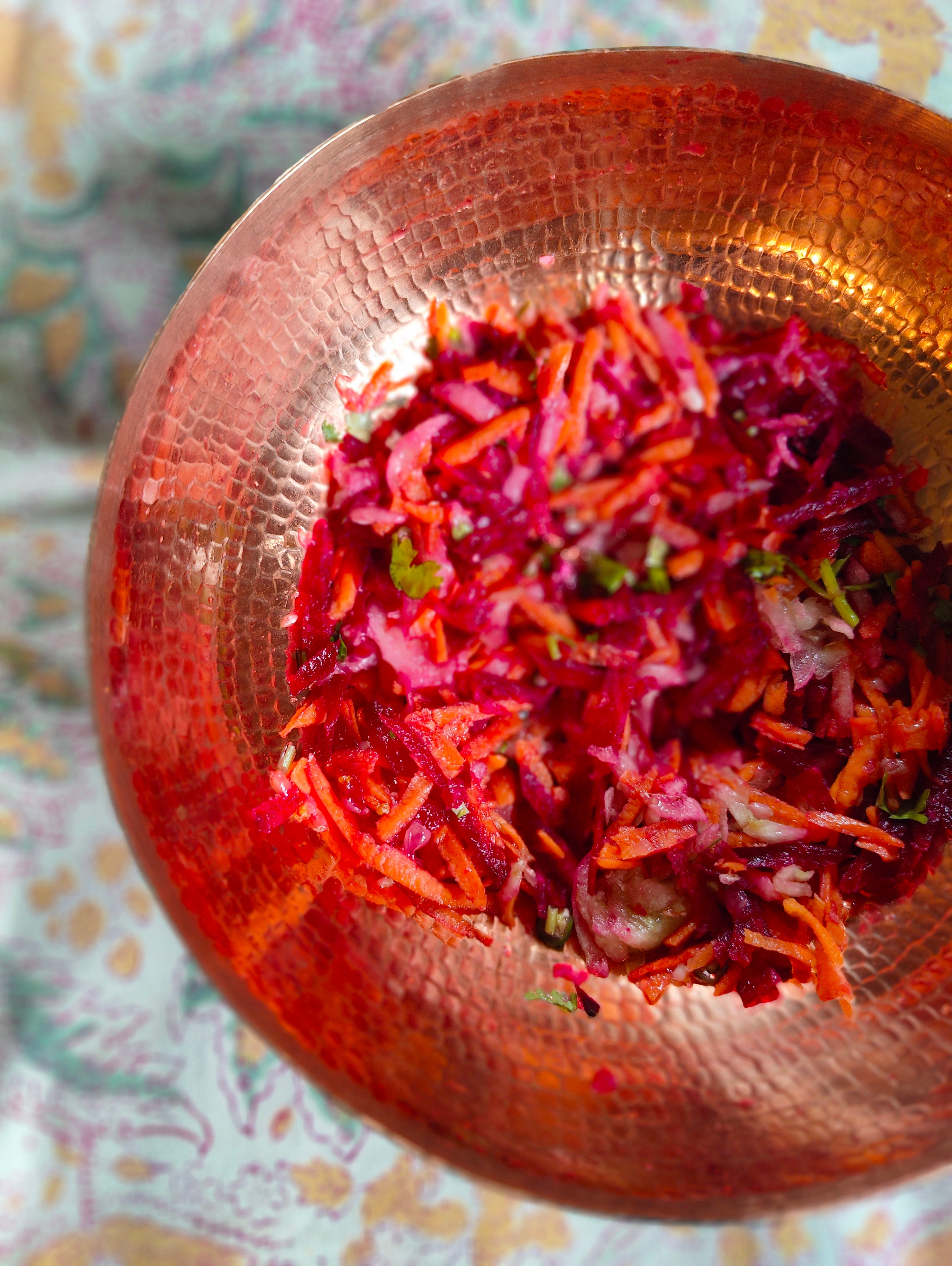
A beetroot, radish and carrot koshimbir. For which I greated two beets, two carrots, and one little red radish, added in a finely cut green chili, and massaged into it a mix of lime juice, sugar, salt, and mustard powder.
________